

We spend most of our lives inside. However, most people don’t realize that indoor air can be 5 times more polluted than outside air. Your lungs are working double-time with pet dander, cooking smoke, seasonal pollen, and everyday household dust.
Buying an air purifier seems like an easy solution, but walking down that aisle can be confusing. This air purifier buying guide will help you cut through technical terms such as “True HEPA”, “CADR ratings”, and “Activated Carbon” — so you don’t end up with a pricey fan that does a poor job cleaning your room.
I made this air purifier buying guide to break down exactly what matters, so let’s get to the bottom of what you really need to be breathing clean, fresh air in your own home.
1. Filter Types (The Heart of the Machine)
The quality of an air purifier depends on its filters. Before you get caught up in fancy smart features, you need to understand what is actually cleaning your air.
The Pre-Filter
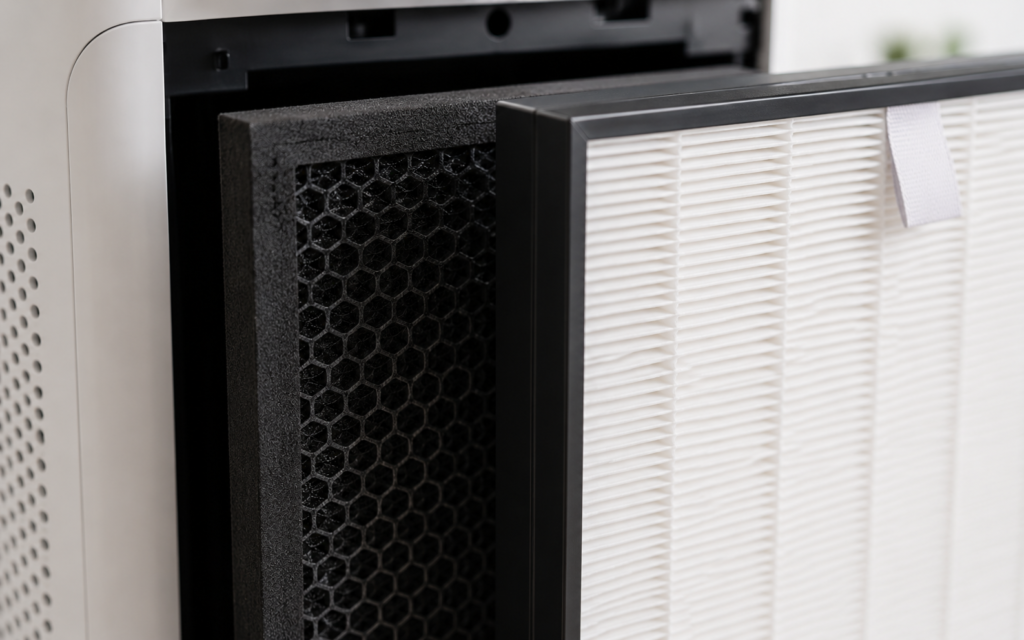
Think of it as the bouncer at the door. It picks up the big stuff like visible pet hair, large dust bunnies and lint. A good pre-filter is generally washable and does wonders to prolong the life of your more expensive internal filters.
True HEPA Filters
This is the gold standard for air purification. To be called “True HEPA”, a filter must trap 99.97% of particles that are 0.3 microns in size.
- What it traps: Pollen, mold spores, fine dust and pet dander.
- If you have allergies: Don’t buy a machine without a True HEPA filter.
Activated Carbon Filters
HEPA filters capture solid particles but can not filter gases. This is where activated carbon comes into play.
- What it traps: Cooking odors, cigarette smoke, wildfire smoke, chemical odors from cleaning products.
- Pro Tip: If your main goal is to remove strong odors, look for a unit that features a thick, heavy carbon filter (not just a thin black sponge).
2. Understanding Room Size and CADR Ratings
You can’t put a small desk purifier in a large living room and expect it to work. You have to choose the machine according to your room size.
What does CADR mean?
CADR means Clean Air Delivery Rate. It tells you exactly how fast the unit will clean the air in a specific size room. The higher the number, the faster the clean.
- Small Rooms (Less Than 200 sq. ft.): Ideal for bedrooms or home offices.
- Medium Rooms (200 – 400 sq. ft.): Great for master bedrooms, large kitchens or small apartments.
- Large Rooms (400+ sq. ft.): Ideal for open-concept living rooms or basements with high ceilings.
ACH (Air Changes Per Hour): Why It’s Important
CADR tells you how fast it cleans the air, and ACH tells you how many times it cleans the entire room in an hour.
- The Gold Standard: For allergies or asthma, buy a machine rated for 4x ACH (that is, it filters the room’s air completely every 15 minutes). The cheaper machines may only have 2x ACH, and the stale air will sit around too long.
This Air Purifier Buying Guide Helps You Match the Right Model
Now that you know how they work, you have to pick the right model. We test and review air purifiers for every scenario. Browse our detailed guides below to find exactly what you’re looking for:
By Room Size:
- Best Large Room Air Purifiers
- Best Air Purifiers for Small Bedrooms & Offices
- Top Whole House Air Purifier Systems
By Specific Conditions (Allergies, Pets, Smoking):
- Top Air Purifiers for Allergies
- Top Large Room Air Purifiers for Bedroom, Pets & Smart Home
- Best Air Purifiers for Wildfire Smoke & Cooking Odors
- Best Air Purifiers for Mold Spores
Budget & Features:
- Best Air Purifiers Under $100
- Top Air Purifiers Under $200 Dollars
- Best Smart Air Purifiers with WiFi and Voice Control
Air Purifier Parts & Upkeep:
- Ultimate Guide to Replacing True HEPA Filters
- Best Replacement Filters for Activated Carbon
(Note: Click the links above for our full reviews and current prices for each category!)
4. Other Features: Which Are Really Worth It?
With the right room size and filters you will see a lot of extra features. Here is what really counts:
Smart Sensors and Automatic Mode
This is very recommended. A smart sensor is always monitoring your room’s air quality. Burn dinner and the machine automatically ups the fan speed to clear the smoke, then goes back to quiet mode when the air is clear.
Sleep Mode and Noise Level
If you are placing this in your bedroom, check the decibel (dB) rating. The sleep mode is good as it switches off all the bright LED display lights and reduces the fan to a whisper quiet level so you can sleep uninterrupted.
5. Ozone Warning: Safety First
Don’t purchase anything that is sold as an “Ozone Generator.” Ozone does kill odors but it is a known lung irritant — the EPA warns against ozone-generating air cleaners due to their health risks. Stick to mechanical filtration (HEPA and Carbon) to protect your family.
6. FAQs (Frequently Asked Questions)
How frequently do I need to change the filters?
It depends on your environment, but True HEPA filters typically need to be replaced every 6 to 12 months on average. Pre-filters can be washed or vacuumed monthly to help the machine run efficiently.
Do air purifiers use a lot of electricity?
Not even close. Most air purifiers today use less energy than a regular light bulb. Even if you run them 24/7 on a medium setting, they will hardly make a dent in your monthly electric bill.
Should I keep my air purifier on all the time?
Yes. Indoor air quality is always in flux due to dust, cooking, and open windows. The best way to keep the air clean is to keep your machine running on “Auto” continuously.
Can an air purifier cool the room like an AC?
No. They do push air out and can create a slight breeze, but they don’t have any refrigerants or compressors. They just clean the air. They don’t actually drop the temperature of the room.
Where Should An Air Purifier Be Placed In A Room?
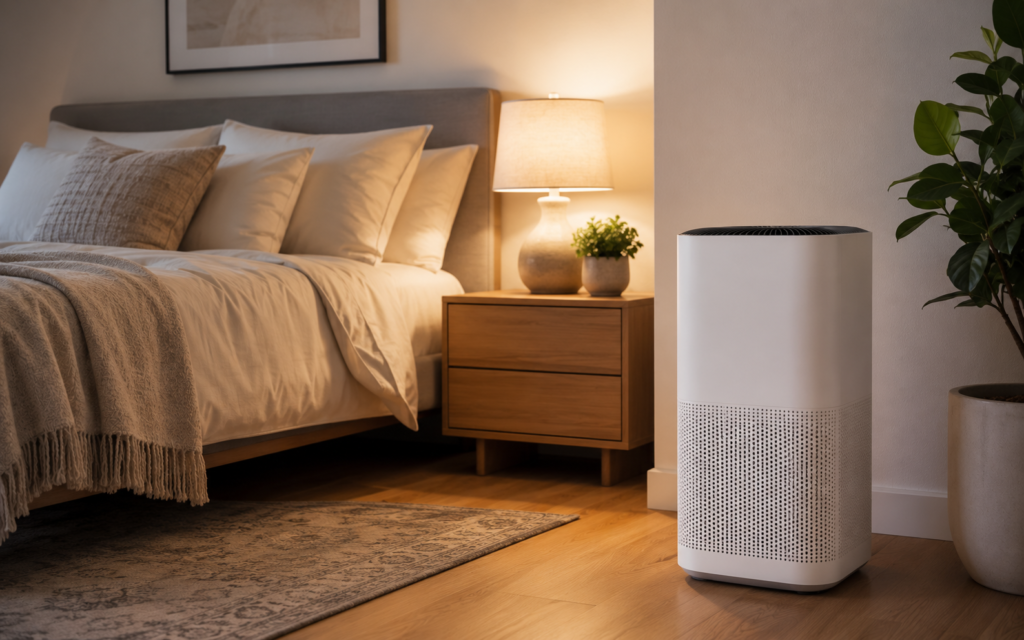
Place your air purifier at least 3 to 5 feet off the ground to pick up floor dust and floating particles. Avoid placing it in corners or near large furniture that may obstruct air movement. If you are placing it in a bedroom, place it about 6 to 10 feet from your bed so that the direct breeze does not bother you while you are sleeping.
Do air purifiers take out dust and pet hair?
Yes. The pre-filter catches large particles such as pet hair and visible dust, while the True HEPA filter captures microscopic dander and fine dust that trigger allergies. You still need a good vacuum, but an air cleaner won’t clean your floors. It only cleans the air that goes through it.
7. Quick Buying Checklist
Before adding to cart, ensure your chosen air purifier ticks these boxes:
- It has a true HEPA filter, not just a “HEPA-like” one.
- The CADR rating is equal to or larger than your room size.
- It has a thick Activated Carbon Filter for pets, smoke or cooking odors.
- If it goes into a bedroom, it has a Sleep Mode or low decibel (dB) rating.
- Replacement filters are readily available and cheap online.
The Bottom Line: Your Air Purifier Buying Guide Recap
When you buy an air purifier you are investing in your daily health. Don’t get caught up in fancy marketing speak. Get one with enough activated carbon if you have odor problems, measure your room size, and make sure it has a True HEPA filter.
Want to start breathing better? Head back up to our specific buying guides in Section 3 to find the exact machine you need, compare the top models and start building a healthier home today!

